
Patalkot
150 ptsChhindwara · 95 km
A horseshoe valley sunk 350 m into the Satpura plateau, home to Bharia and Gond villages that had almost no outside contact until the 1990s.
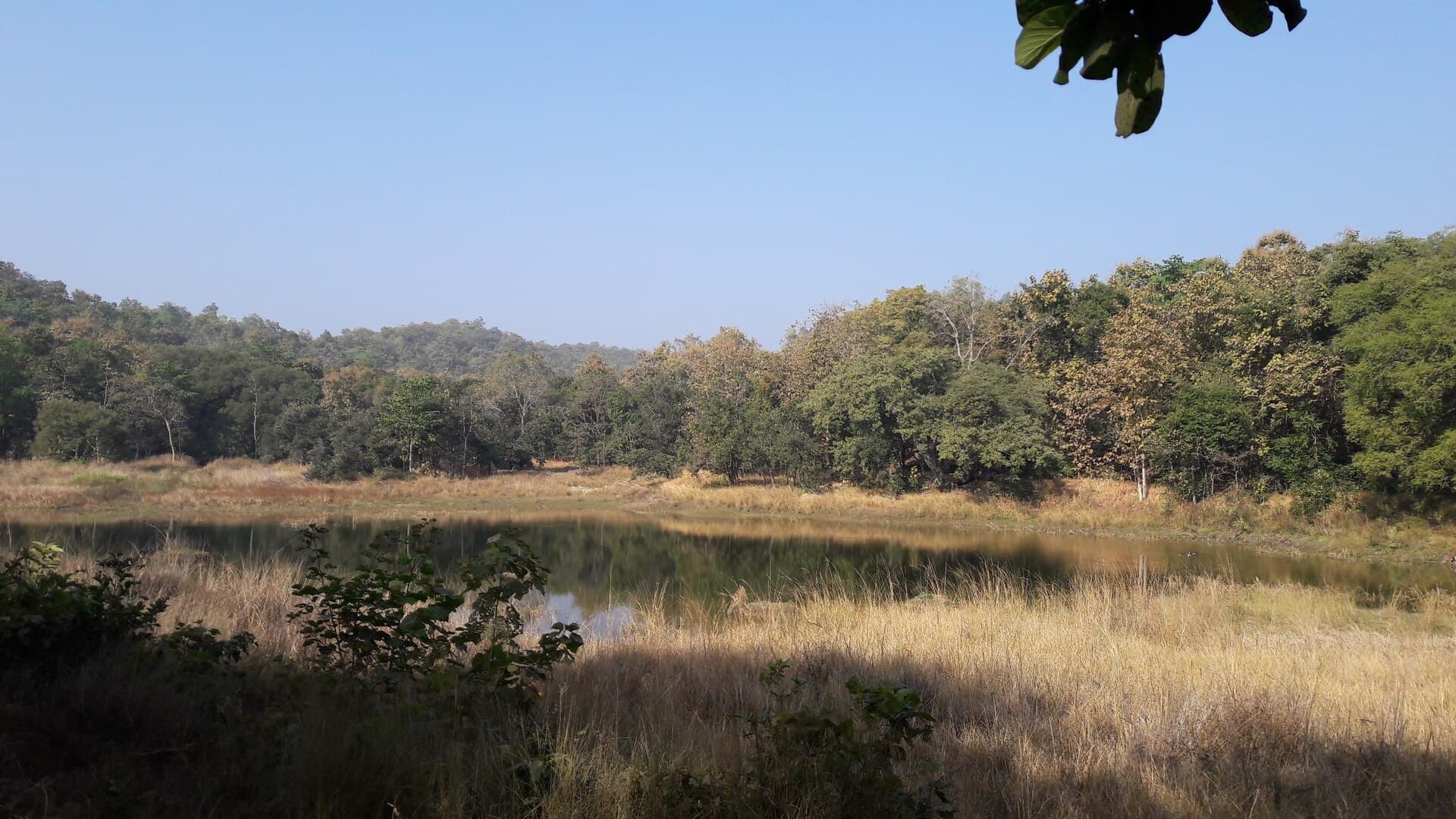 © ChanchalJhanwar · CC BY-SA 4.0
Hero photograph by ChanchalJhanwar (CC BY-SA 4.0) · source. Remaining gallery slots await licensed imagery.
Pench has the best chital and gaur density in the region, which means good predator activity, and it is genuinely under-visited relative to how good it is. It is also India's first Dark Sky Park.
Kipling set Mowgli's story in Seoni, and he took the names from R.A. Sterndale's Seonee, published 1877, having never been within a thousand miles of the place. The forest is real enough: teak-dominated, dry deciduous, cut through by the Pench river which dries to a chain of pools in summer and concentrates everything around them. Pench was notified in 1975 and became a tiger reserve in 1992. In 2024 the Pench buffer was declared India's first Dark Sky Park, so the night sky here is formally protected.
6 things · 15 hr 30 min to do all of them
3 days · 21 hrs of planned activity
Afternoon safari, Turia zone
3 hr 30 min
Night sky session in the Dark Sky buffer
2 hrs
Morning safari, Turia — Alikatta meadow
4 hrs
Rest
4 hrs
Buffer zone safari from Rukhad
3 hr 30 min
Morning safari or boat safari on the reservoir
4 hrs
The shaded ring is the check-in geofence — 5000 m around the site. Your GPS has to fall inside it for a check-in to count.
21.7000, 79.3000 · Open turn-by-turn in Google Maps
Nagpur airport is 93 km from Turia gate, about 2 hours, and is the easiest approach. Seoni is 30 km. Jabalpur is 200 km.
Last mile: Turia is the main gate with the lodge cluster. Karmajhiri and Rukhad gates are quieter and further round.
Standard safari jeeps. Turia gate has the better facilities.
4.6from 520 explorers
Only explorers with a verified check-in here can leave a review.
Nikhil Rao
@ghatwalker · 8 Jun 2026
Arrived expecting fifteen minutes and stayed two hours. The detail rewards slowing down, which is not something you can tell from photographs.
Tip: Budget more time than you think.
22 found this helpful
Divya Pandey
@shikhara · 2 Jun 2026
Took my parents, both in their seventies. The main section was manageable but the upper part was not — we turned back. Would have liked to know that in advance.
Tip: The upper section has no handrail and uneven steps. Plan for it.
13 found this helpful
Meera Nair
@thelongtail · 19 Mar 2026
Monsoon visit. Everything was green and the water was full, but the steps were lethal and I nearly went over twice. Stunning, and I would not bring children.
Tip: Monsoon is the best and the most dangerous time. Proper shoes.
8 found this helpful
Pooja Shrivastava
@earlylight · 15 Mar 2026
Went on a Tuesday morning and had the place almost to myself. The caretaker walked me round for twenty minutes without being asked and knew far more than the signage does. Give yourself longer than the app suggests — I stayed nearly three hours.
Tip: Weekday mornings are empty. Weekends are a different place entirely.
31 found this helpful
Ordered by tier before distance — the least-visited neighbours come first. This list is the redistribution engine.
Chhindwara · 95 km
A horseshoe valley sunk 350 m into the Satpura plateau, home to Bharia and Gond villages that had almost no outside contact until the 1990s.