
Morena · 9.4 km
A circular eleventh-century temple of 64 yogini shrines on a hilltop — widely said to be the model for the Indian Parliament building.
 © Anuppyr007 · CC BY-SA 4.0
Hero photograph by Anuppyr007 (CC BY-SA 4.0) · source. Remaining gallery slots await licensed imagery.
Gwalior district, Madhya Pradesh
Man Singh Palace is the most exuberant pre-Mughal palace in India, covered in turquoise and yellow tilework of ducks, elephants and crocodiles. And in a small temple on the way up is an inscription from 876 CE containing a zero — one of the earliest written anywhere.
The fort has been contested for a thousand years: Kachchhapaghatas, Tomars, Lodis, Mughals, Marathas, Scindias, the British, and the Rani of Jhansi, who died in the fighting here in 1858. Man Singh Tomar built the palace between 1486 and 1516. Its underground chambers were later used by the Mughals as a state prison; Aurangzeb had his brother Murad executed here. On the eastern face, the Siddhachal Jain colossi are carved straight into the cliff — twenty-four figures, the tallest 17 metres, defaced by Babur's troops in 1527 and only partly restored.
7 things · 5 hr 5 min to do all of them
Single day · 8 hr 45 min of planned activity
Walk up the Urwahi road past the Jain colossi
45 min
Or drive to the Hathi Pol gate
Man Singh Palace and the dungeons
1 hr 30 min
Chaturbhuj Temple — the zero inscription
30 min
Teli ka Mandir and Sas-Bahu temples
1 hr 15 min
Lunch in the city
1 hr 15 min
Gujari Mahal Archaeological Museum
1 hr
Jai Vilas Palace and the Scindia Museum
1 hr 30 min
6 km into the city
Light and sound show at the fort
1 hr
The shaded ring is the check-in geofence — 1500 m around the site. Your GPS has to fall inside it for a check-in to count.
26.2303, 78.1691 · Open turn-by-turn in Google Maps
Gwalior Junction is a major stop on the Delhi–Mumbai main line, two hours from Agra by Shatabdi. Gwalior airport has Delhi and Mumbai flights. The fort is 4 km from the station.
Last mile: Two approaches: the Urwahi road, which is drivable and passes the Jain colossi, and the eastern ramp, which is a steep 30-minute walk through seven gates.
A long steep ramp climb or a road to the top. Inside the fort it is extensive walking on uneven stone.
4.6from 2,210 explorers
Only explorers with a verified check-in here can leave a review.
Divya Pandey
@shikhara · 6 Aug 2026
Took my parents, both in their seventies. The main section was manageable but the upper part was not — we turned back. Would have liked to know that in advance.
Tip: The upper section has no handrail and uneven steps. Plan for it.
34 found this helpful
Pooja Shrivastava
@earlylight · 4 Jul 2026
Worth the detour, genuinely. The road in is rough for the last stretch and I would not take a low-clearance car after rain, but the site itself is in better condition than I expected.
Tip: Fill up fuel before you turn off the highway — there is nothing after that.
36 found this helpful
Devendra Singh
@fortfinder · 17 Jun 2026
Worth the detour, genuinely. The road in is rough for the last stretch and I would not take a low-clearance car after rain, but the site itself is in better condition than I expected.
Tip: Fill up fuel before you turn off the highway — there is nothing after that.
9 found this helpful
Neha Thakur
@quietmiles · 16 Apr 2026
Facilities are basically non-existent, which the listing is honest about. Carry water and use the toilet before you leave the last town.
Tip: No water, no toilets, no signal. Plan accordingly.
10 found this helpful
Sneha Iyer
@sneha.plans · 14 Apr 2026
Second visit, this time at sunset instead of midday, and it is a completely different experience. The light does most of the work here.
Tip: Come in the last ninety minutes of daylight.
27 found this helpful
Ordered by tier before distance — the least-visited neighbours come first. This list is the redistribution engine.
Morena · 9.4 km
A circular eleventh-century temple of 64 yogini shrines on a hilltop — widely said to be the model for the Indian Parliament building.

Morena · 12 km
Around 200 small eighth-century temples rebuilt stone by stone from rubble, in Chambal ravine country, by an archaeologist who negotiated with dacoits to do it.
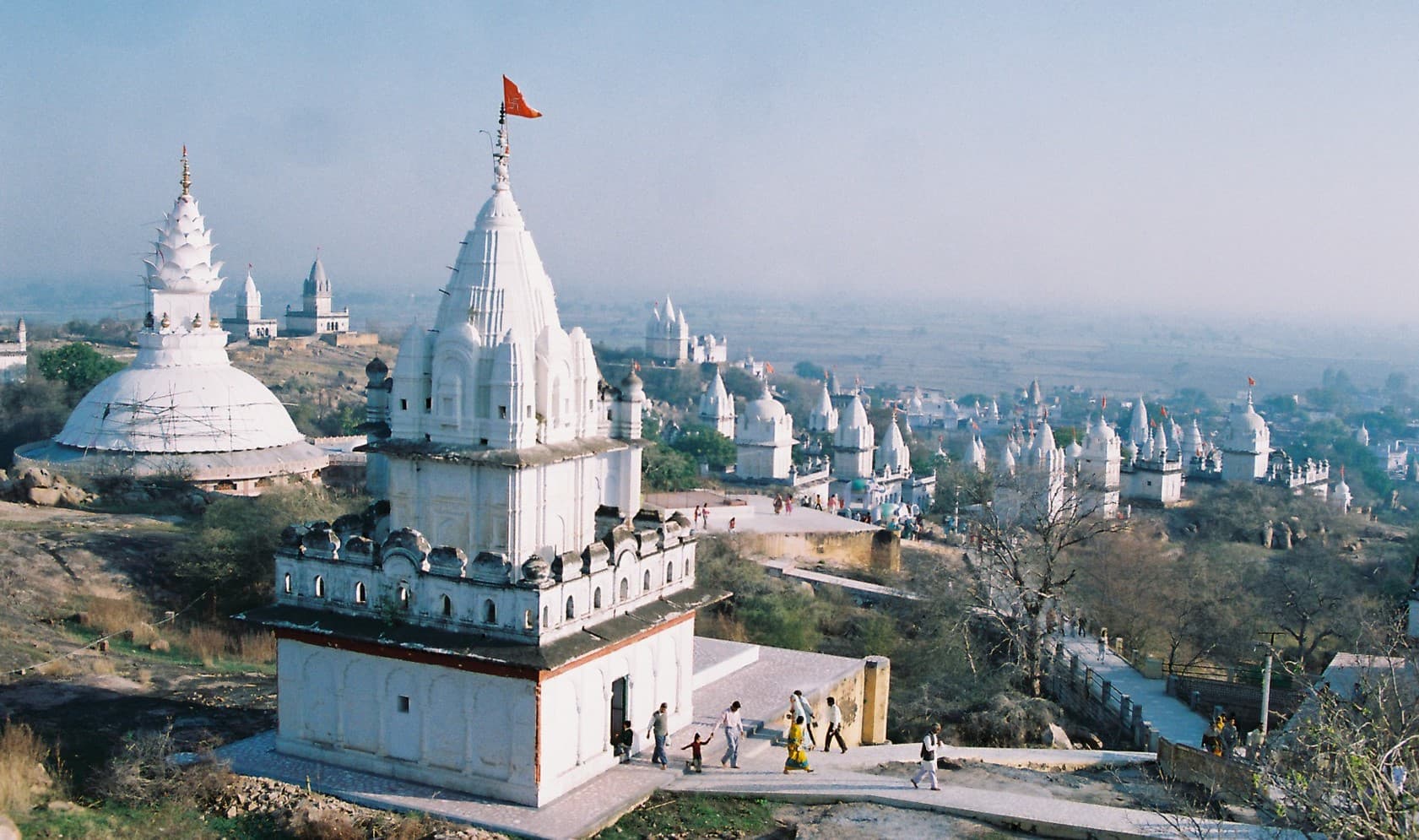
Datia · 63 km
Seventy-seven white Jain temples on a single hill, climbed barefoot, in near silence.